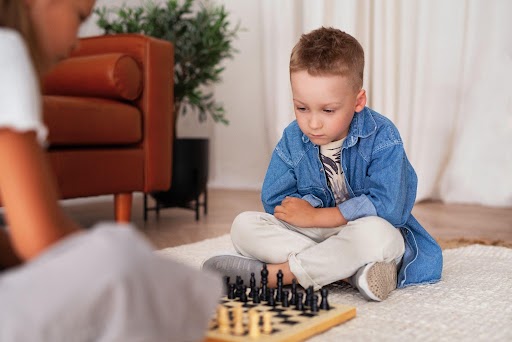
Imagine a child sitting in front of a chessboard for the first time. The pieces may look simple, but every move introduces a new idea. A pawn teaches movement and patience, a knight introduces unusual patterns, and the king makes every decision feel important. With the right guidance, those early discoveries can gradually become a structured learning journey. A well-designed beginner chess course can help children understand the game step by step while developing habits that support better thinking both on and away from the board.
Starting With The Chessboard Basics
Every chess journey begins with understanding the board. Before a child can think about tactics or strategic plans, they need to know how the pieces move and how the board is organised.
Early lessons usually introduce the names and movements of all six pieces, along with concepts such as check, checkmate, castling, and capturing. These fundamentals may seem basic, but they form the foundation for everything that follows.
Children also begin learning how each piece interacts with others. A rook’s open-file strength is different from a bishop’s diagonal movement, while knights require players to think about squares in a different way.
Learning To Think Before Moving
One of the most useful habits chess can develop is pausing before making a decision. Young players often want to move quickly because a particular move looks exciting. Coaching can encourage them to consider what could happen next.
A simple thought process can involve checking whether the intended move leaves a piece vulnerable, whether the opponent has a threat, and what response may follow. Repeating this process helps children shift from impulsive moves towards deliberate decisions.
This habit can become particularly valuable as games become more complicated and several possible moves appear on the board.
Building A Child-Friendly Learning Path
Children do not all learn chess at the same speed. One student may quickly recognise tactical patterns, while another may need more practice with piece movement and board awareness.
A structured learning path can accommodate these differences by introducing concepts in stages. Beginner lessons can focus on rules and simple positions before gradually introducing tactics, opening principles, and basic endgames.
This makes a chess beginner course for kids easier to follow because children are not expected to understand advanced concepts before developing the skills needed to use them.
Introducing Tactics Through Patterns
Chess tactics become easier to understand when children can recognise recurring patterns. Forks, pins, skewers, discovered attacks, and simple mating combinations can turn an apparently complicated position into a familiar puzzle.
Instead of simply memorising definitions, young players can learn by solving positions and identifying why a particular move works.
Puzzle-based practice also gives children an opportunity to make mistakes without the pressure of losing an entire game. Each incorrect answer can become a learning moment that improves pattern recognition.
Understanding The Three Stages of A Game
As children become more comfortable with chess, lessons can introduce the three broad stages of a game: opening, middlegame, and endgame.
The opening teaches players how to develop pieces, control useful squares, and protect the king. The middlegame introduces planning, exchanges, attacks, and positional decisions. The endgame shows how even a small number of pieces can create complex situations.
Understanding these stages helps young players see chess as a connected process rather than a series of unrelated moves.
Using Games As Learning Material
Playing games is essential, but simply completing one game after another does not always explain why certain mistakes happen. Reviewing finished games can reveal patterns that are difficult to notice while playing.
A coach can help a child identify moments where a better decision was possible. Perhaps a piece was moved too many times in the opening, a threat was overlooked, or an exchange changed the position unnecessarily. This approach is especially useful within a chess beginner course for kids, where guided analysis can help young players understand their decisions.
Game analysis turns experience into useful feedback. Over time, children can begin recognising similar situations during future games.
Developing Strategic Awareness Gradually
Once basic tactics become familiar, children can start exploring broader strategic ideas. These include improving poorly placed pieces, controlling important squares, creating weaknesses, and choosing when to exchange material.
Strategy can initially feel abstract to young players. It becomes easier when connected to actual positions and practical examples.
For instance, a child may learn that moving a piece simply because it can move is not always useful. A stronger move may improve the piece’s position while also preparing for a future plan.
Making Progress Visible To Children
Progress is not always reflected by winning every game. A child who previously missed simple checks but now spots them consistently has made meaningful progress, even if tournament results have not changed immediately.
Tracking puzzles solved, concepts learned, games reviewed, and recurring mistakes can give children a clearer picture of their development.
This approach can also help parents understand what their child is currently learning rather than judging progress only through wins and losses.
Choosing Structured Online Chess Learning
Online chess education can make regular practice easier for families with busy schedules. Children can learn from home while still receiving structured lessons, guided activities, puzzles, and feedback.
When comparing programs, parents can look at factors such as the curriculum, coach experience, class format, student age groups, practice opportunities, and methods used to track progress.
A best online chess academy for one child may not necessarily suit another. The most useful choice depends on the learner’s age, experience, learning pace, goals, and preferred teaching style.
Conclusion
A strong chess foundation develops one concept at a time. Children first learn how the board works, then discover patterns, tactics, strategy, game analysis, and competitive decision-making. With suitable guidance and regular practice, the game can remain challenging while still being enjoyable for young learners.
For families looking for a structured way to introduce children to chess and gradually develop their skills, Chessbrainz offers online learning programs designed around different stages of a player’s development.
About The Author