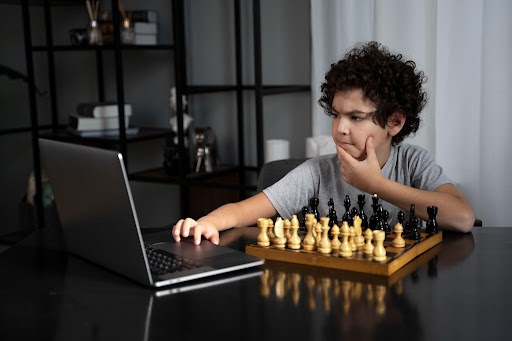
Walk past a tournament board mid-game, and nothing dramatic seems to be happening. No pieces hanging, no immediate tactics, just two players quietly shifting pawns and pieces a few squares at a time. Yet inside that quiet exterior, strong players are reading the position closely, picking up on subtle clues that shape an entire plan several moves before anything visibly decisive occurs. Developing this skill is exactly what a good chess tutorial for intermediate players focuses on, teaching students to notice what the position is actually telling them.
Why Subtle Clues Matter More Than Obvious Ones
Beginners tend to react only to obvious signals: a hanging piece, an open check, a direct threat. Tournament-level players operate differently; they notice smaller signs long before they become urgent: a slightly misplaced piece, a pawn structure that will become weak in five moves, a king that’s technically safe now but won’t be once a few pieces are traded. These subtle clues form the real foundation of positional planning, well before any concrete tactic appears on the board.
Reading Pawn Structure as a Roadmap
Pawn structure is often described as the skeleton of a chess position, and for good reason. It rarely changes quickly, which means it offers a relatively stable foundation for long-term planning.
Strong players read pawn structure for:
- Weaknesses to target, like isolated or backward pawns that will become liabilities later
- Open or soon-to-open files, which hint at where rooks will eventually become powerful
- Pawn breaks, specific pawn advances that will open lines or create imbalances favourable to one side
- Space advantages, indicating which side has more room to manoeuvre pieces effectively
A player who learns to read pawn structure accurately can often predict, several moves in advance, where the game’s critical battles will eventually take place.
Piece Placement as a Silent Signal
Beyond pawns, piece placement offers constant subtle information. A knight on the rim, a bishop blocked by its own pawns, a rook not yet connected to open files, these aren’t just observations; they’re opportunities waiting to be exploited.
Learning to actively scan for these signals, rather than waiting for an obvious tactic to appear, is a core part of how players learn chess intermediate to advanced level thinking. It shifts the player’s mindset from reactive to proactive, constantly asking “what’s slightly wrong with this position, for either side?”
Building a Plan From Multiple Small Clues
Strong chess planning rarely begins with one obvious feature of the position. Instead, experienced players collect several small clues and connect them before deciding what to do next. This creates plans that remain useful even when the opponent changes the position.
- Identify the key imbalances: Look beyond material and examine pawn structure, king safety, space, development, weak squares, and piece activity. These differences often reveal where the position can be improved.
- Assess every piece: Identify poorly placed or inactive pieces on both sides. Improving your least effective piece can sometimes be more valuable than immediately pursuing an attacking idea.
- Look for useful pawn breaks: Determine which pawn advances could open files, create weaknesses, gain space, or activate your pieces. A well-timed pawn break can change the character of the entire position.
- Consider piece manoeuvres: Think about where each piece would ideally belong. A knight may need several moves to reach a strong outpost, while a rook might become more effective on an open or semi-open file.
- Connect the clues: Avoid building a plan around one isolated advantage. Instead, choose an idea that improves several aspects of the position at once.
- Anticipate the opponent’s response: A good plan should account for what your opponent can challenge, exchange, or prevent.
This layered process helps players create coherent plans instead of making disconnected move-by-move decisions.
Patience as a Positional Skill
One of the harder lessons for improving players is accepting that positional plans often take many moves to mature. Unlike a tactical shot that resolves in two or three moves, a positional plan built around a pawn weakness might not pay off for ten or fifteen moves. This requires genuine patience, continuing to improve piece placement, restrict opponent counterplay, and slowly increase pressure, without rushing toward premature tactics that the position doesn’t yet support.
Common Mistakes When Reading Positional Clues
A few recurring errors show up frequently among players still developing this skill:
- Fixating on one clue while ignoring others that complicate the picture
- Forcing a plan prematurely, before the position genuinely supports it
- Missing opponent counterplay, assuming a slow plan will go unchallenged
- Abandoning a sound long-term plan too early, switching strategies impatiently when progress feels slow
Recognising these patterns, ideally through honest post-game review or coached feedback, helps players develop steadier, more disciplined positional judgement over time.
Why Guided Study Accelerates This Skill
Reading subtle positional clues is difficult to teach through puzzles alone, since most puzzles present sharp, forcing positions rather than the quiet manoeuvring battles where this skill actually matters most. This is precisely why structured, example-driven coaching, walking through real games move by move with explanation, proves so effective for developing genuine positional understanding.
Conclusion
Tournament-level planning rarely starts with an obvious signal. It begins with subtle clues, pawn weaknesses, awkward piece placement, slowly developing imbalances, woven together into a coherent, patient strategy. Developing this kind of positional awareness takes deliberate, guided practice rather than casual play alone. For players ready to build this skill properly, studying with a best chess academy that emphasises example-driven positional training offers the clearest path toward reading a board the way strong tournament players do.
ChessBrainz’s example-driven coaching helps intermediate and advanced students read subtle positional signals, pawn structure, piece placement, and long-term imbalances through Grandmaster-designed lessons. With 150+ FIDE-rated coaches across 50+ countries, the academy builds the patient, plan-oriented thinking tournament players rely on.
About The Author