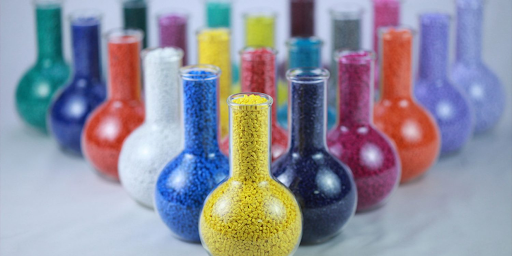
POM (Polyoxymethylene) — also known as acetal or Delrin — is one of the highest-performing engineering plastics available. It’s tough, stiff, dimensionally stable, and naturally slippery. But to unlock its full potential, you need the right POM Masterbatch. Compound manufacturers in India have developed strong expertise in this area. If you work with precision engineering parts, this guide is essential reading.
What Is POM Masterbatch?
These masterbatches are concentrated blends of pigments, functional additives, or processing aids in a POM carrier resin. It allows you to add color, lubrication, UV stability, or other performance properties to POM-based products without affecting the precise crystalline structure that makes POM so valuable.
POM is used where precision, low friction, and mechanical strength matter most:
- Gears and cogs in mechanical assemblies
- Door handles, clips, and fasteners in automotive
- Insulin pen cartridges and medical device components
- Conveyor system parts in food processing
- Plumbing valves and fittings
Why POM Masterbatch Formulation Is Complex
POM is one of the most demanding polymers to work with. Its narrow processing window, sensitivity to acidic environments, and tendency to release formaldehyde when degraded make formulation challenging.
A compound manufacturer in India who truly understands POM knows:
- POM processing temperature ranges from 190–230 degrees C with very tight tolerances
- Basic or acidic contaminants cause rapid thermal degradation and gas generation
- POM is hygroscopic — moisture during processing causes surface defects and bubbles
- Some pigments can catalyze POM degradation — only compatible, POM-tested pigments should be used
What Compound Manufacturers in India Offer for POM Masterbatch
POM-Specific Pigment Selection
Only pigments that are thermally stable above 230 degrees C and chemically neutral in the POM matrix should be used. Compound manufacturers in India who specialize in engineering polymers maintain approved pigment lists for POM specifically.
Tight Moisture Control
POM masterbatch must be produced and supplied in moisture-free conditions. Reputable compound manufacturers dry the POM carrier resin before compounding and supply product in moisture-barrier packaging.
Compliance Documentation
For medical and food-contact applications, POM compound manufacturers in India can provide full ingredient disclosure, FDA compliance statements, and RoHS/REACH documentation.
Technical Processing Support
A good manufacturer doesn’t just ship product — they provide processing guidelines, drying conditions, and troubleshooting support specific to POM.
Tips for Processing POM Masterbatch
- Dry thoroughly before use — 2–4 hours at 80 degrees C in a desiccant dryer
- Keep the melt temperature within 190–230 degrees C — too high causes degradation and gas
- Avoid contamination with acidic materials — PVC, some flame retardants, or acidic colorants trigger POM breakdown
- Purge the machine between material changes — POM residue degrades quickly at elevated temperatures
- Store in sealed, dry containers — POM absorbs moisture rapidly if exposed to ambient air
Common Mistakes with POM Masterbatch
- Using pigments not tested for POM compatibility. Some pigments catalyze formaldehyde release.
- Skipping drying. This is the most common processing mistake. Wet POM produces bubble-filled parts.
- Exceeding the processing temperature window. POM degrades rapidly above 240 degrees C.
- Ignoring regulatory requirements. Medical and food-contact POM parts need specific compliance documentation.
These Masterbatches require specialist knowledge — from pigment selection to moisture control to processing guidance. Compound manufacturers in India who understand the chemistry and engineering of POM are well-positioned to supply high-quality masterbatch that enhances your products without compromising performance.
Contact experienced compound manufacturers in India today and get the right POM masterbatch formulation for your precision engineering or high-performance application.
POM Masterbatch Applications and Recommended Grades
|
Application |
Required Property |
Masterbatch Type |
|
Precision gears |
Dimensional stability + low friction |
Lubricated POM MB |
| Medical components | Chemical purity + regulatory compliance | Medical-grade color MB |
|
Automotive clips |
UV resistance + color |
UV + Color MB |
|
Food processing parts |
NSF/FDA compliance |
Food-grade color MB |
|
Electronic connectors |
Flame retardancy |
FR POM MB |
Frequently Asked Questions (FAQs)
Q1: What is POM Masterbatch used for?
These Masterbatch adds color, UV stability, lubrication, or flame retardancy to POM (acetal/Delrin) plastic parts used in automotive, medical, electronics, and precision engineering applications.
Q2: Why is POM Masterbatch harder to formulate than standard color masterbatch?
POM has a narrow processing window, reacts to acidic or basic contaminants, and degrades readily at elevated temperatures — all of which require specialized formulation and processing knowledge.
Q3: Can compound manufacturers in India supply medical-grade POM Masterbatch?
Yes. Several Indian compound manufacturers supply FDA-compliant or USP Class VI-compatible POM masterbatch for medical device applications.
Q4: How do I dry POM masterbatch before use?
Dry at 80 degrees Celsius for 2–4 hours in a desiccant dryer. Avoid hot-air dryers, as they don’t remove moisture effectively from hygroscopic engineering polymers.
Q5: What pigments are safe to use in POM?
Only pigments tested and approved for POM by the manufacturer should be used. Many common pigments cause POM degradation. Ask your compound manufacturer for their POM-approved pigment list.
Q6: Is POM Masterbatch suitable for food-contact applications?
Yes, with the right formulation. The compound manufacturer must supply documentation confirming compliance with FDA 21 CFR or EU 10/2011 food-contact regulations.
Q7: What is the typical let-down ratio for POM Masterbatch?
Usually 2–5% depending on the colorant loading and desired color depth. Follow the manufacturer’s specific recommendations for the grade supplied.
Q8: What problems occur if POM is processed too hot?
Temperatures above 230–240 degrees C cause POM degradation — characterized by formaldehyde gas release, brown discoloration, bubbles, and dramatically weakened mechanical properties.
About The Author