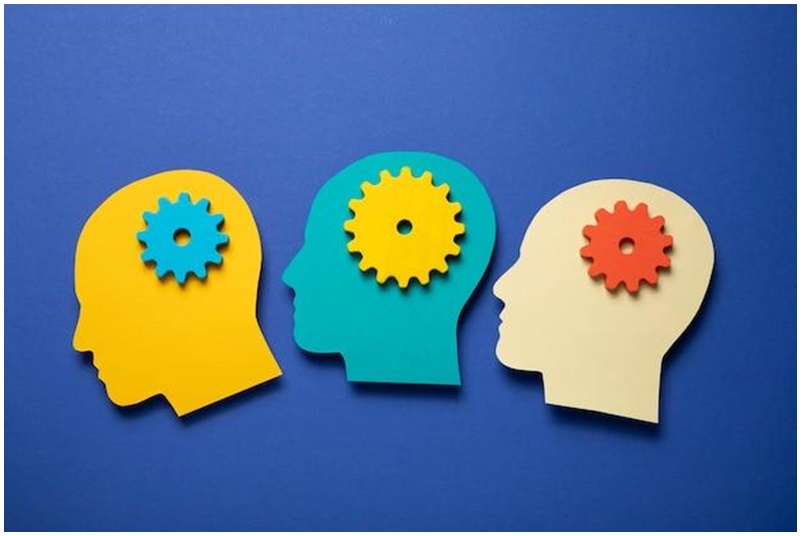
Today’s biggest challenges don’t fit neatly into academic boxes. Climate change isn’t just a science problem—it’s wrapped up in economics, politics, and human behavior. Tech companies aren’t just building apps—they’re reshaping how we think, work, and connect. Yet most education still compartmentalizes knowledge as if these connections don’t exist.
Employers keep saying they need people who can adapt and pivot. They want workers who’ll learn new tools quickly and collaborate across departments without missing a beat.
The old model of deep expertise in one area? It’s not cutting it anymore. We need people who can think fluidly across disciplines. This approach isn’t just a lofty ideal—it taps into how our brains actually work.
Cognitive Science Insights
Your brain loves finding patterns, even in the weirdest places. That’s analogical transfer at work—the mental process that lets you see how electrical circuits work like water flowing through pipes, or how ant colonies mirror internet traffic patterns. Sure, it sounds abstract until you realize this is exactly how breakthrough innovations happen.
Analogical transfer works best when you’re not trying too hard. Students who learned about fortress sieges solved radiation problems by thinking about converging attacks. Urban planners design better traffic systems by studying how tree roots spread nutrients. The connections aren’t obvious until suddenly they are.
But raw pattern-matching isn’t enough. You need metacognitive scaffolding—basically, teaching people to think about their thinking. When students reflect on which strategies work and why, they get better at adapting those strategies to new situations. It’s like having a mental toolkit that keeps expanding.
Mix in multiple analytical frameworks and you’re building cognitive flexibility. A student who can approach the same topic through scientific method and literary critique develops neural pathways that stay nimble. They don’t get stuck in one way of thinking. Understanding these mental mechanics reveals why we need a clear blueprint for putting ideas into practice.
Blueprint for Rigorous Integration
Integration without foundation is just academic chaos. You can’t blend disciplines effectively if students haven’t mastered the basics first. Each subject needs solid groundwork before you start building bridges between them.
Think of it like cooking. You wouldn’t combine ingredients without knowing what each one brings to the dish. Same principle applies here—foundational depth gives students something substantial to connect across disciplines. Assessment alignment keeps everything honest. Your tests need to measure both individual subject mastery and integrative thinking. Otherwise, you’re sending mixed signals about what actually matters. The best assessments show whether students can apply their knowledge in new contexts, not just recall facts.
Transfer scaffolding is where the magic happens. You embed reflection and application tasks right into the curriculum. Students practice generalizing their insights to fresh challenges. They’re not just learning content—they’re learning how to learn. When that blueprint takes shape in early grades, curiosity often leads the way.
Elementary STEAM Projects
Elementary STEAM projects are where things get delightfully unpredictable. Ask kids to build a bridge that’s also a piece of art, and you’ll get everything from rainbow-colored suspension cables to structures that look more like abstract sculptures than engineering marvels. The creativity is the point.
These thematic projects work because they let young minds wander between subjects naturally. Kids don’t see artificial boundaries between art and math the way adults do. They’ll paint geometric patterns or measure the height of their clay volcanoes without thinking twice about crossing disciplines.
Here’s what happens in practice. Skill-based mini-lessons provide the foundation, while cross-discipline prompts spark those crucial connections. Students learn basic math concepts, then apply them in art projects. They explore simple science principles, then express their understanding through creative work.
Portfolio assessments and reflection journals capture this process beautifully. Kids document their thinking as they move between subjects, showing how their understanding evolves. These tools reveal integrative thinking in action and help students recognize their own growth patterns. As those sparks of play mature, students tackle interdisciplinary work with deeper analysis.
High School Integration
High school students face the delightful challenge of analyzing texts from cultures they’ve never experienced while pretending to understand nuances that might escape native speakers. Welcome to the world of deep cultural analysis, where every interpretation comes with footnotes.
The IB English Language and Literature curriculum handles this complexity by weaving linguistic analysis with cultural interpretation. Students examine syntax and rhetorical devices while exploring how cultural context shapes meaning. They’ll compare a political speech from one country with a personal narrative from another, dissecting tone and audience awareness alongside social norms.
Classroom discussions might pair a postcolonial novel with contemporary media coverage. Students consider how historical power dynamics influence language choices. This dual focus helps them understand both language structures and the cultural values that inform communication strategies.
The curriculum builds foundational depth through language conventions and literary theories. Coherent connections emerge through comparative text analysis. Assessment alignment happens via internal assessments that measure discourse analysis and personal response in equal measure.
Reflective commentaries and world-media comparisons act as transfer scaffolding. Students apply their analytical skills to real-world contexts, fostering critical thinking that extends well beyond the classroom. By the time they reach campus, students are primed to weave two disciplines into a unified path.
University Double Majors
Double majors aren’t about doubling your workload—they’re about finding the sweet spot where two fields intersect. A computer science and philosophy combination might seem odd until you’re tackling AI ethics or designing user interfaces that respect human agency.
Coordinated pathways make this work. Joint seminars explore intersections like technology and ethics. Students draw insights from both fields instead of treating them as separate intellectual territories. The goal is synthesis, not just addition.
Foundational depth comes through carefully designed prerequisites. You can’t skip the fundamentals in either field. Coherent connections develop through cross-listed assignments that require integration. Students balance coursework from both majors while developing comprehensive understanding of each discipline’s core concepts.
Shared capstone projects provide assessment alignment. Students synthesize learning from both majors in a single culminating experience. Interdisciplinary research seminars offer transfer scaffolding, letting students apply integrated knowledge in novel contexts. This approach prepares them for careers that demand expertise across boundaries. And those dual-focus habits don’t stay confined to college—they shape professional growth, too.
Professional Bridging
Working adults don’t have time for academic theory that’s disconnected from reality. They need education that applies immediately to their professional challenges. That’s why continuing-education certificates work so well when they merge data analytics with ethical reasoning.
These programs combine technical modules with humanities seminars. Participants get comprehensive learning experiences that fit their professional needs. They’re not just learning new skills—they’re learning how to think about those skills in broader contexts.
Expert-led core courses ensure foundational depth. Joint case studies create coherent connections between technical and humanistic knowledge. Participants apply theoretical concepts to real-world scenarios, gaining practical insights that enhance their professional capabilities right away.
Applied projects serve as assessment tools. They let learners demonstrate integrative skills in practical scenarios. Structured reflection workshops provide transfer scaffolding, helping participants connect their learning to their professional lives in concrete ways. Of course, ambitious programs can still go off the rails without the right guardrails.
These programs adapt integration for working adults by focusing on relevant applications. The result? Enhanced career growth and adaptability.
Avoiding Common Pitfalls
Integration done wrong looks like a shallow buffet of topics with no connecting thread. Students sample a bit of everything but never develop deep understanding of anything. It’s educational fast food—filling but not nourishing.
The biggest mistake? Skipping scaffolding and hoping students will make connections on their own. They won’t. Without intentional structure, you get fragmented learning experiences that confuse rather than clarify.
Missing any part of the integration framework creates problems. Weak foundational depth means students can’t make meaningful connections. Poor coherent links between disciplines leave learning fractured. Misaligned assessment sends mixed messages about priorities.
Smart educators engage in faculty co-planning from the start. They launch sequenced units strategically and conduct regular reviews based on clear criteria. These practices ensure integration remains rigorous and meaningful rather than scattered and superficial. When integration hits its marks, the impact spills over into every workplace.
From Classroom to Career
The cognitive habits interdisciplinary education builds? They’re exactly what modern workplaces demand. Analogical transfer lets graduates tackle ambiguous tasks in cross-functional teams by drawing on diverse knowledge bases. They spot patterns others miss.
Metacognitive scaffolding supports self-directed upskilling and role transitions. When the job market shifts, these graduates adapt. They identify what they need to learn and figure out how to learn it efficiently. They’re built for lifelong learning.
Industry observers praise graduates who “think like scientists and write like journalists.” These people approach projects by forming hypotheses. They design small experiments to test assumptions. Then they distill data into clear reports for diverse audiences. A marketing analyst runs A/B tests on customer engagement tactics, analyzes results for statistical significance, and crafts narratives that guide strategy decisions.
Environmental policy professionals gather field measurements, interpret data trends, and write accessible briefs that inform community planning. This blend of empirical reasoning and storytelling ensures recommendations are both rigorously validated and effectively communicated. It’s the kind of thinking that gets results. With these success stories in view, it’s clear how to chart the next steps.
Charting the Path Forward
We started by talking about challenges that don’t fit in boxes. The solution isn’t to throw out the boxes—it’s to build better bridges between them. Interdisciplinary curricula grounded in cognitive science and evaluated through clear frameworks do exactly that.
They create learners who can navigate complexity without losing their footing. People who can spot patterns across domains and apply insights where they’re needed most. In a world that keeps surprising us, that’s not just useful—it’s essential.
The four-criterion framework gives educators and learners a roadmap for building these capabilities. The question isn’t whether you’ll encounter interdisciplinary challenges in your career. It’s whether you’ll be ready for them. Consider this your invitation to start building those bridges today—and see where they lead. After all, the view from the intersection is always more interesting than the view from the corner office.
About The Author