A dematerialized account or demat account, as the term suggests, allows investors to keep their shares and securities in electronic form. The demat account meaning relates to the process of dematerialization, whereby investors convert hard copies of share certificates to electronic formats, which has become standard practice for investing in equity markets in India.
Like the bank account, this one also operates on the same principle: holding shares, bonds, government securities, mutual funds, and exchange-traded funds instead of money. If an investor buys shares, the system automatically credits them to the demat account, and when they sell, the system debits them from that account. Thus, the account records all transactions made within it, allowing for easy tracking of portfolio performance.
Types of Demat Accounts
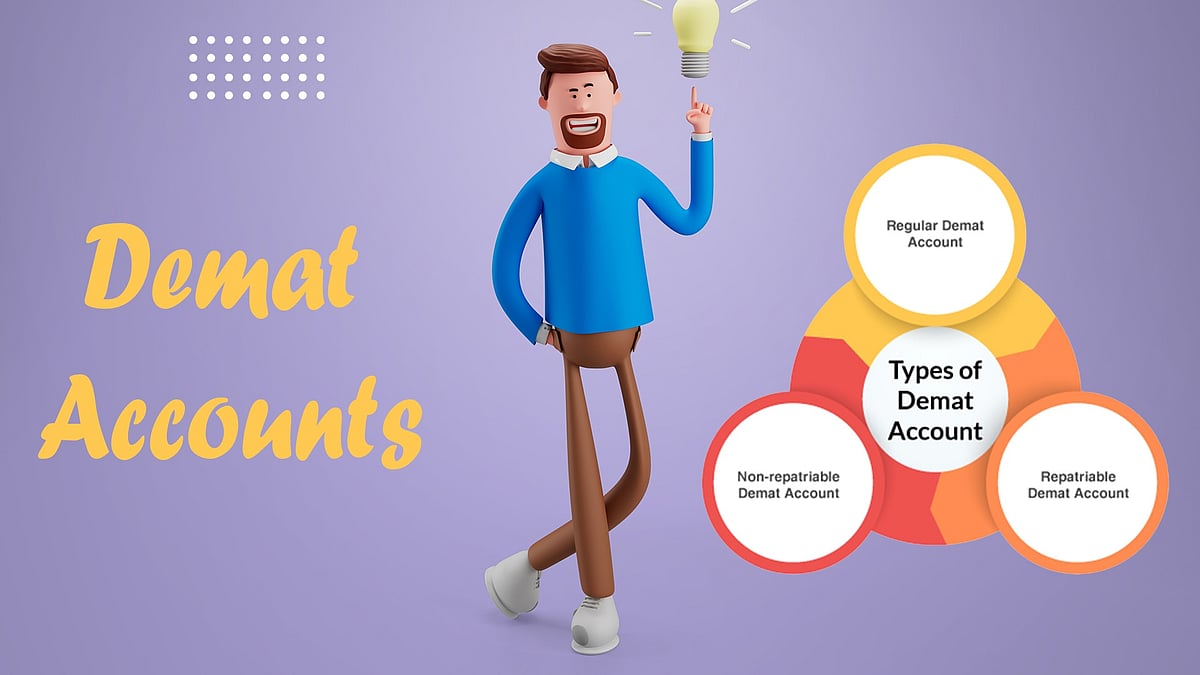
Investors can choose from three basic types of demat accounts available in India:
Regular Demat Account – The regular demat accounts suit Indian residents investing money in equities and other securities.
Repatriable Demat Account – This kind of account is meant for NRIs and allows them to transfer foreign funds when they link it to a Non-Resident External (NRE) bank account.
Non-Repatriable Demat Account – This type of account is also for NRIs but does not allow them to transfer money abroad and links it to a Non-Resident Ordinary (NRO) bank account.
Free Demat Account: Concept and Inclusions
A free demat account usually refers to one with no account opening charges. Some service providers, for instance, may waive the annual maintenance charge (AMC) for the first year or a limited period. But investors must read the terms and conditions to know what falls under “free demat account.” Opening costs could be free, but other transaction charges, conversion charges, or any services may cost a fortune.
Factors to Consider: How to Choose the Right Demat Account for Your Investment Needs
Investors must examine several criteria carefully before deciding how to choose the right demat account for their investment needs. Each investor has their own set of different requirements based on the volume of investment, frequency of trading, and type of instruments included in the portfolio. Here are some of those vital factors:
- Charges
Various types of depository participants (DP) have different structures for costs that may include account opening fees, annual maintenance charges (AMC), transaction charges, and custodian fees. For example, some DPs offer free demat account opening but charge higher transaction fees. Investors should know the overall cost of maintaining and operating the demat account, which affects effective decision-making.
- User Interface and Accessibility
The usability of the associated trading platform and mobile app, combined with the demat account, serves as a key consideration. An interface that allows effective holding and trade monitoring, as well as report generation, could enhance the investment experience. Some providers also integrate access to market research and real-time data.
- Customer Support
Investors must consider the availability and responsiveness of customer support before choosing a specific open demat account. The popular options include provisions for live chat, call centers, or mailing responsiveness.
- Linkage with Trading and Bank Accounts
A demat account needs linking to a trading account to facilitate buying and selling in the stock market. It must also connect to a bank account for fund transfers. A few service providers also offer the 3-in-1 account setup (bank, demat, and trading accounts), which may ease operations for some users.
- Reputation and Regulatory Compliance
Investors should ensure that the depository participant has enrolled either in NSDL or in CDSL. Compliance with regulations, together with the DP’s reputation, fosters reliability and trustworthiness in service.
- Additional Services
Some special demat accounts provide extra-value services, such as research reports, investment advice, portfolio tracking, and updates on major corporate actions. While these services are not compulsory, they offer valuable information to guide the decisions of investors keen on tracking market movements.
- Transfer and Conversion Services
Investors holding physical share certificates might need services to convert them into electronic form. The facility should also minimize procedural hurdles when transferring shares from one demat account to another, either manually or by closure and transfer.
Conclusion
To participate in the equity market, investors must understand what a demat account means and how it fits into the investment landscape. It facilitates investment, ensures holdings, and promotes efficient trading.
About The Author