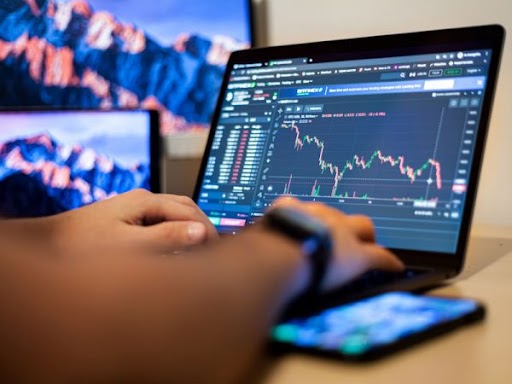
Most conversations about improving as a trader focus on strategy, psychology, or risk management. The environment where all of that actually happens gets far less attention. But the trader terminal you work inside every day isn’t just a delivery mechanism for charts and orders.
It actively shapes what you notice, what you ignore, and how your thinking about markets develops over time.
That influence is worth understanding, because it doesn’t announce itself. It happens quietly, through the accumulated effect of thousands of small interactions with the same interface.
The way information is arranged on screen determines what gets seen first. Before any analysis begins, the layout of a terminal has already made decisions about what occupies the centre of attention and what sits at the periphery. A workspace that puts a single clean chart front and centre trains attention differently than one cluttered with a dozen instruments, multiple overlapping timeframes, and a live news feed competing for the same cognitive space.
Traders who have spent years inside the same terminal often describe a quality of perception that newcomers don’t yet have.
They see things in the chart before they’ve consciously identified them. Certain configurations of price look immediately familiar.
Certain conditions register as significant almost before the analytical mind has engaged. That perceptual fluency isn’t innate. It develops through sustained exposure to a consistent visual environment, and it transfers poorly when the environment changes.
This is one of the less obvious costs of switching platforms that experienced traders recognise and newer ones often don’t anticipate. A move to a new trader terminal doesn’t just require learning new menu locations.
It temporarily disrupts the pattern recognition that took months to build, because the visual presentation of the same underlying data looks different enough to require reorientation.
Speed and responsiveness also affect how traders engage with the market in ways that go beyond the obvious.
A terminal that executes instantly and confirms immediately creates a different psychological relationship with order placement than one that lags or requotes.
The first builds a clean feedback loop between decision and result. The second introduces noise into that loop, and noise in feedback systems slows learning.
Beyond execution, the responsiveness of charts to interaction matters. When zooming, scrolling, or adjusting timeframes happens smoothly and instantly, the analytical process stays fluid. Friction in chart navigation breaks concentration at precisely the moments when sustained focus matters most.
Experienced traders will describe certain platforms as feeling like an extension of thought and others as feeling like working against resistance. That qualitative difference has real consequences for the quality of analysis produced in each session.
The depth of historical data available within a trader terminal quietly shapes how traders think about context. A platform that displays several years of clean, accessible price history encourages the habit of zooming out before zooming in, of understanding the broader structure before committing to a position based on short-term patterns.
A platform where retrieving historical data is cumbersome or limited tends to produce traders who work with insufficient context, not through any analytical deficiency but simply because the tool makes context inconvenient to access.
The relationship between a trader and their terminal deepens with time in the same way that any skilled practitioner’s relationship with their primary tool deepens. A professional photographer who has used the same camera body for years operates it without conscious attention. A chef who has worked with the same knife for a decade applies it with a precision that comes from accumulated physical memory.
The trader terminal is the primary instrument through which market understanding is built and applied. Choosing it carefully and then committing to it long enough to develop genuine fluency is not a minor logistical decision. It’s a significant part of how trading ability is constructed.
About The Author