Introduction
When someone steps into a lift, they’re in a bubble. No phone notifications, no street noise, no other ads screaming for attention. In that 30 to 60 seconds, your brand gets the floor — literally. That’s why creative elevator ads have become one of the most talked-about formats in hyperlocal marketing.
More and more brands are discovering that elevator advertising, when done right, delivers impressions that stick. But here’s the thing — generic posters don’t cut it anymore. People notice bad design instantly in a small, enclosed space. The creative quality matters enormously.
This guide breaks down how to create elevator ads that stop people mid-yawn, what the best elevator advertising agencies do differently, and how you can apply these ideas to your next campaign.
What Makes Elevator Ads ‘Creative’?
Creative elevator ads aren’t just pretty pictures. They’re strategically designed to communicate a message within seconds, in a confined space, with little competition. A creative ad in a lift does three things well: grabs attention, delivers the message fast, and leaves a lasting impression.
The best elevator advertising agency teams think about the context first. Who rides this elevator? What’s their mindset? A resident heading to work is different from a shopper at a mall. Good creative matches the placement with the mood of the audience.
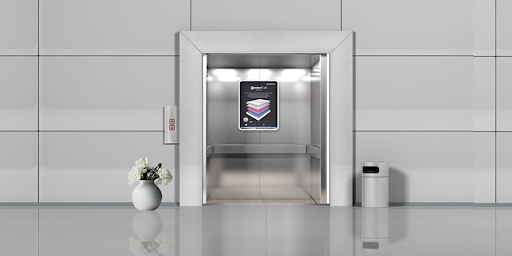
Think of the space as a tiny theatre. You’re the performer. Every square inch of the wall, door, floor, and even the ceiling can become part of your story.
Why Creative Elevator Advertising Works
The psychology behind elevator advertising is simple — people are slightly uncomfortable in lifts. They need something to look at. If your ad is engaging, it fills that awkward silence perfectly. Here’s what makes it so effective:
- Captive audience: Riders can’t leave and they need something to focus on
- Minimal competition: One or two ads per lift, not fifty like on a webpage
- Daily repetition: Regular building occupants see the same ad multiple times
- Targeted placement: Reach specific demographics by choosing the right buildings
- High recall rate: Studies show elevator ads are remembered more than banner ads
Creative Formats Used in Elevator Advertising
Elevator advertising agencies offer a variety of formats. Choosing the right one depends on your budget, campaign goals, and the type of building you’re targeting. Here’s a breakdown:
| Creative Format | Visual Impact | Ideal For | Durability |
| Full Door Wrap | Very High | Brand launches, real estate | 1–3 months |
| Backlit Panel | High | FMCG, healthcare brands | 1–6 months |
| Digital Screen Loop | Very High | Dynamic, time-sensitive offers | Ongoing |
| Floor Vinyl Graphics | Medium-High | Retail, fashion brands | 2–4 weeks |
| Side Wall Panel + Mirror Sticker | Medium | Service brands, education | 1–3 months |
Step-by-Step Guide to Designing Great Elevator Ads
Creating a high-impact elevator ad requires more thought than a standard print design. Here’s how professional elevator advertising agencies approach it:
- Step 1 — Define your one message: What’s the single thing you want riders to remember? Limit it to one thought.
- Step 2 — Design for 3 seconds: Imagine the viewer only glances at your ad. What do they take away?
- Step 3 — Use bold visuals: High-contrast images and minimal text perform best in tight spaces.
- Step 4 — Add a clear CTA: A phone number, QR code, or website works well — keep it short.
- Step 5 — Match the creative to the audience: Premium buildings need polished design; family apartments need warmer, friendlier tones.
- Step 6 — Test with real feedback: Show the design to someone unfamiliar with your brand and ask what they understood.
Best Practices for Elevator Advertising in India
The Indian market has some unique characteristics that affect creative elevator ads. Building types, audience income levels, and regional preferences all matter. Here’s what works:
- Use Hindi or regional language when targeting tier-2 cities or older demographics
- Include a QR code for mobile-first audiences who engage on smartphones
- Go bold on colours — pastel creatives often get ignored in lift settings
- Avoid cluttered designs — empty space is not wasted space in this format
- Seasonal and festival-themed creatives see higher engagement during Diwali and other peak periods
Common Mistakes in Elevator Ad Campaigns
Many brands waste money on elevator advertising by making avoidable errors. Here’s what to skip:
- Too many words: If a rider needs more than 5 seconds to read it, it’s too long
- Low-resolution images: Blurry prints hurt your credibility instantly
- No clear contact or next step: A beautiful ad with no CTA is a missed opportunity
- Wrong building selection: Premium brand in the wrong neighbourhood = wasted budget
- Not changing creatives: A stale ad stops getting noticed after a few weeks
Frequently Asked Questions
Q1. What are creative elevator ads?
Creative elevator ads are visually engaging brand placements inside elevator cabins. They use bold design, minimal text, and strategic placement to communicate a brand message to a captive audience in 30 to 60 seconds.
Q2. How do I find a good elevator advertising agency?
Look for agencies with a verified building inventory, strong creative teams, and transparent reporting. Ask for campaign samples and client references before committing to a contract.
Q3. How much space does an elevator ad typically use?
Formats vary. A door wrap covers the full door panel (roughly 3×7 feet). Side panels are smaller. Digital screens are usually 19 to 32 inches in diagonal. Your agency will provide exact specs for each format.
Q4. Can small businesses afford elevator advertising?
Yes. Small businesses can start with a limited number of buildings in their target locality. Static poster formats are the most affordable entry point, and some agencies offer short 15- or 30-day trials.
Q5. What industries benefit most from elevator advertising?
Real estate, education, healthcare, retail, food delivery, and financial services all see strong results from elevator advertising. Any brand targeting residents or office workers in specific areas is a natural fit.
Q6. How long should a creative elevator ad campaign run?
A minimum of 30 days is recommended for any noticeable brand recall. For maximum impact, 60 to 90 days in the same building creates strong repeated exposure among the regular audience.
Q7. Can I use interactive elements in elevator ads?
Yes. QR codes are the easiest interactive element to add. Digital screens can also display videos, time-sensitive messages, and even weather-based or location-based content in premium buildings.
Q8. Is elevator advertising better than social media ads for local brands?
They serve different purposes. Elevator advertising builds strong offline brand recall in specific locations. Social media ads offer broader digital reach. The best strategy often combines both for maximum local impact.
Conclusion
Creative elevator ads are not just a trend — they’re a proven strategy for brands that want deep, local impact. In a cluttered advertising world, the elevator is one of the last truly captive spaces. Use it wisely.
Partner with a skilled elevator advertising agency that understands design, placement strategy, and audience behaviour. Get your creative right, choose the right buildings, and run campaigns long enough to build real recall.
Ready to take your brand into the most watched walls in the city? Start planning your elevator advertising campaign today.
About The Author